


Obsidian has become the default recommendation for fantasy writers who've outgrown Notion. It's local-first, infinitely customizable, and the markdown files are yours forever. The graph view looks like a fantasy map of your own mind.
It's also, for a lot of writers, the wrong tool — not because it's bad, but because what it's good at and what novelists actually need are subtly different things. This post is an honest comparison of where Obsidian shines for fantasy writing, where it doesn't, and how Inkwarden's approach differs.
What Obsidian gets right
Let's start with the genuine strengths, because there are real ones.
Local files you own. Your vault is a folder of markdown files on your computer. No subscription required to access your own work. No company that can disappear and take your data with it. For a project you'll work on for five years, that's not a minor consideration — it's a serious advantage.
Bidirectional linking that actually works. Mention [[Captain Vex]] in a location note, and Vex's note shows that location as a backlink. No manual relationship management, no database admin. The graph builds itself as you write.
Customization without limits. Plugins for everything. Themes for everything. If you can imagine a workflow, someone has probably built a plugin for it. For tinkerers, this is paradise.

The graph view. Visually, seeing your world as a network of connected nodes is genuinely useful for spotting clusters, isolated entries, and the shape of your worldbuilding.
These aren't small things. For the right kind of writer, Obsidian is genuinely transformative.
Where Obsidian gets hard for fiction writers
The trouble is that Obsidian is a personal knowledge management tool that fantasy writers have adopted, not a worldbuilding tool that happens to have good linking. The difference shows up in specific ways.
The setup tax is real. A working fantasy writing vault requires plugins (Dataview, Templater, Kanban, Calendar, possibly Excalidraw for maps, possibly Longform for drafting), templates for each entry type, folder conventions, tagging conventions, and a workflow you've designed yourself. People spend weeks on this before writing a word of fiction. Some never get past it. The tool is so flexible that you're forced to make a hundred small decisions about how your worldbuilding system should work — decisions that have nothing to do with your actual story.
Timelines are a plugin problem. Obsidian doesn't have a real timeline. You can install a timeline plugin, configure it, write your events with the right frontmatter, and get something workable. It is not as good as a tool that was built around timelines from day one. Overlaying canon and outline, handling uncertain dates, spotting contradictions — all of this is achievable in Obsidian with enough configuration, and none of it is easy.

Characters are documents, not voices. This is the same point that applies to Notion, and it applies here too. Your character notes are static. You can't ask Mara how she'd react to a piece of news. You can read her backstory and infer, but the character doesn't have a voice you can engage with. For a tool that's helping you write fiction, that's a meaningful gap.
Drafting in Obsidian is doable, not great. The Longform plugin exists and is well-made. Drafting a novel in it works. It is not as comfortable as a real long-form writing environment, and the markdown editor isn't built for prose the way it's built for notes. Most Obsidian novelists eventually use it for world reference and draft elsewhere — which means the integration between world and prose, the thing you set Obsidian up for in the first place, gets weaker.
Contradiction detection is on you. Obsidian shows you links. It doesn't tell you when something contradicts something else. If your timeline says the Ash War ended in year 412 and your draft has a character reminiscing about fighting in it in year 410, Obsidian sees two perfectly valid markdown files. Nothing flags the problem.
Sync, mobile, and collaboration are paid or painful. Obsidian Sync is a separate subscription. Mobile editing is workable but not great for long sessions. Collaboration on a vault is genuinely difficult — most setups assume one writer per vault. For solo novelists this is fine; for co-authored projects or game design teams, it's an obstacle.
Where Inkwarden differs
Inkwarden is built around the specific problem of fiction worldbuilding, not general-purpose knowledge management. That focus changes the trade-offs.

Connections happen automatically, no plugins required. Mention a character in another entry and the connection exists. Same as Obsidian's [[wikilinks]], but without you having to type the brackets or maintain the alias list.
Timelines are first-class. Canon and outline live on the same timeline by design. You can see when an outlined event would contradict established history. No plugin configuration, no frontmatter conventions.
Characters have voices. You can talk to your cast in their own voice, grounded in what you've established about them. When you're stuck on a scene and need to know how Mara would actually react, you ask her. The character isn't a document — they're a participant in your worldbuilding.
Drafting lives in the same workspace. A real book editor for page-by-page prose, with your encyclopedia and timeline a click away. No tab-switching between your reference and your manuscript.
The tool surfaces contradictions. If your draft references something that contradicts canon, the system flags it. You don't have to find continuity errors by re-reading 200,000 words.

Zero setup time. You don't design the system before you can use it. You open it and start building your world.
The honest trade-offs
This isn't a tool that's strictly better than Obsidian — it makes different trade-offs, and which trade-offs suit you depends on what you actually want.
You'll prefer Obsidian if: you enjoy tooling and customization for its own sake, you want local-first markdown files you fully control, you're using your vault for many things beyond fiction (personal notes, research, work, etc.), or you have a workflow that's already working and is deeply integrated with other tools you use.
You'll prefer Inkwarden if: you want to spend your time on the story rather than on the system, you want timelines and connections to work without configuration, you want characters you can actually talk to, you want drafting and worldbuilding in one workspace, or you've tried Obsidian, spent six weekends customizing it, and still haven't written chapter one.
What about both?
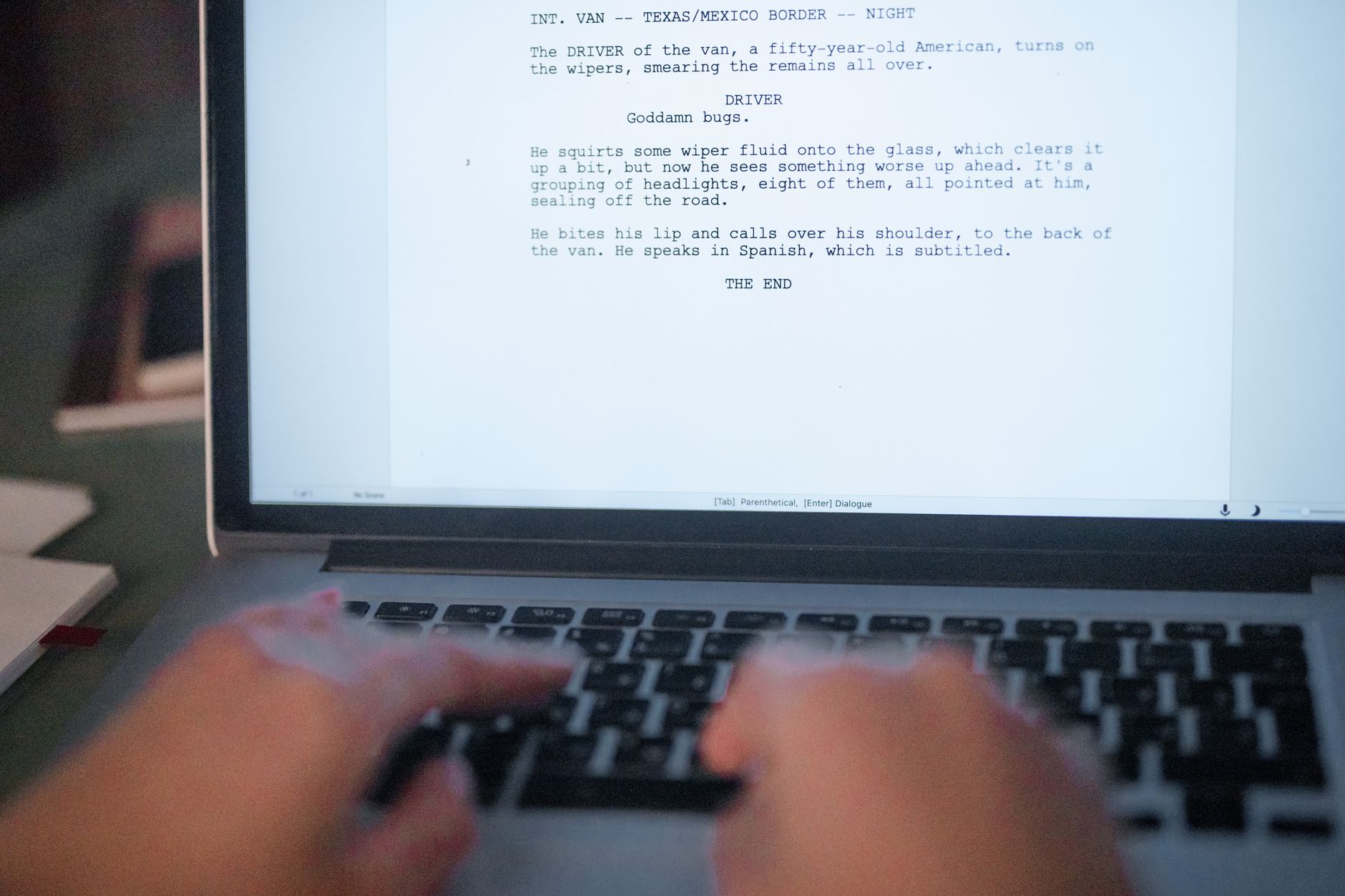
Some writers will use both, and that's a legitimate setup. Obsidian for personal knowledge, research notes, and reading commonplace; Inkwarden for the actual fiction project. There's nothing wrong with having two tools for two jobs.
But for fantasy writers who tried Obsidian hoping it would be the tool that helped them finish their novel, and found themselves three months into vault optimization with no new prose to show for it — Inkwarden is what Obsidian-for-fiction would look like if someone had built it from scratch for that one job.
Join the Inkwarden waitlist if you've felt that pull and want to see what a worldbuilding tool built specifically for fiction feels like.
The bottom line
Obsidian is an excellent knowledge management tool that fantasy writers have stretched into a worldbuilding tool through plugins and discipline. Inkwarden is a worldbuilding tool built for fiction from the foundation up. Both can work. They optimize for different things, and the right one for you is the one whose trade-offs match what you actually need from a creative tool.
If your vault is making you feel productive but you're not actually writing — that's the signal to consider whether the system is the work, or whether the work is supposed to be the story.